What Nobody Tells You Before You Migrate to the Cloud: A CFO's Reality Check
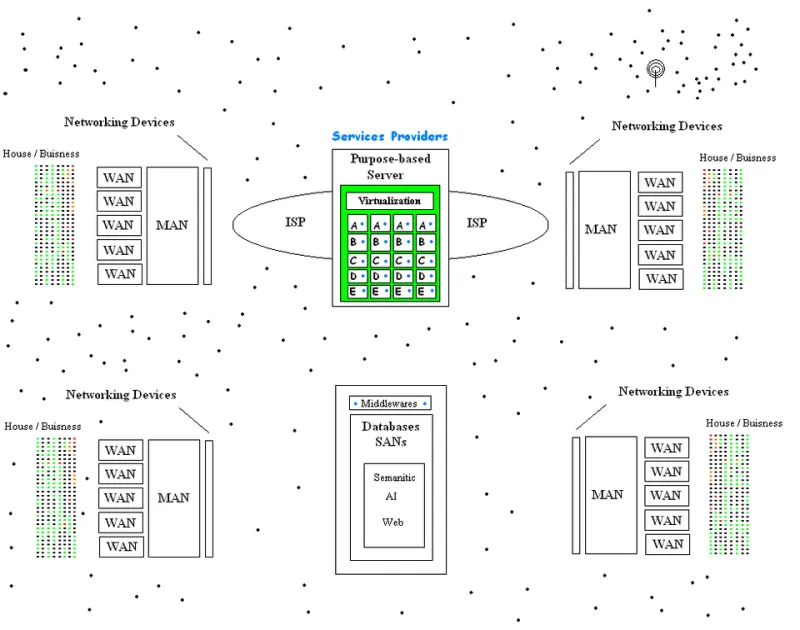
Photo: User:Ramu50, CC BY 3.0, via Wikimedia Commons
The pitch is compelling. Move your infrastructure to the cloud, and you will eliminate capital expenditures, reduce your IT headcount burden, and gain the flexibility to scale on demand. For many organizations, that narrative has proven partially true. For a significant number of others, the post-migration invoice tells a very different story.
At Guru Tech Team, we have guided organizations through cloud transitions across industries, and we have seen a consistent pattern: the gap between projected migration costs and actual expenditures is rarely small, and it is almost never the cloud provider's fault. The disconnect lives in the planning phase—specifically, in what does not get planned for.
The Lift-and-Shift Illusion
One of the most expensive mistakes an organization can make is treating cloud migration as a simple relocation project. Moving a workload from an on-premises server to a cloud instance without re-architecting it for cloud-native behavior is known as a lift-and-shift approach. It is fast, and it is frequently catastrophic for budgets.
Consider a mid-sized healthcare technology firm that migrated 47 virtual machines to a major cloud provider using this method. Within six months, their monthly compute costs had exceeded their previous annual infrastructure budget. Why? Their legacy applications were designed to run continuously on dedicated hardware. In a consumption-based cloud environment, those same applications spun up resources inefficiently, ran idle processes at full billing rates, and triggered egress fees every time data moved between services.
The lesson is straightforward: cloud pricing models reward cloud-native architecture. Applications that were not designed with that architecture in mind will penalize you financially until they are refactored—or retired.
Licensing: The Cost That Hides in Plain Sight
Software licensing in a cloud environment operates under fundamentally different rules than on-premises licensing, and the transition period is where organizations routinely bleed money.
Microsoft licensing is a prime example. Many businesses assume that their existing enterprise agreements will transfer cleanly to a cloud deployment. In practice, certain license types require specific cloud configurations to remain compliant, and others do not transfer at all. Organizations that fail to audit their licensing position before migration can find themselves paying for both on-premises licenses they cannot yet retire and new cloud-based subscriptions they did not anticipate.
Database licensing presents an equally sharp edge. Commercial databases like Oracle carry per-core pricing that can multiply rapidly when workloads are distributed across cloud virtual CPUs. One manufacturing company we are aware of saw its Oracle licensing costs increase by 340 percent after migrating to a cloud environment without first mapping its core count implications.
Before any migration begins, a licensing audit conducted with legal and procurement involvement is not optional. It is foundational.
The True Cost Framework: What to Measure Before You Move
Organizations that avoid budget overruns approach migration cost modeling with a disciplined, multi-layer framework. Here is what that framework must include:
Direct Migration Costs
- Labor hours for assessment, configuration, and testing
- Third-party migration tools and professional services
- Parallel running costs during the transition window (both environments operating simultaneously)
Architectural Remediation Costs
- Application refactoring required for cloud-native compatibility
- Database schema modifications
- API integrations with cloud-native services
Ongoing Operational Costs
- Reserved instance commitments versus on-demand pricing differentials
- Data egress fees (often underestimated by 60 to 80 percent in initial models)
- Monitoring, logging, and security tooling subscriptions
- Cloud management platform licensing
Hidden Organizational Costs
- Retraining existing IT staff for cloud operations
- Temporary productivity loss during transition
- Potential backfill hiring if existing staff lack cloud competencies
Running this analysis before signing a migration contract is the difference between a strategic investment and an unplanned financial burden.
Red Flags in a Migration Strategy That Needs Refinement
Not every migration plan that lands on an executive's desk is ready for execution. Certain structural warning signs indicate that a proposal requires further scrutiny before approval.
Absence of a workload dependency map. If the migration plan does not include a detailed map of how each application communicates with others, the team has not done the prerequisite analysis. Undocumented dependencies cause the most expensive surprises post-migration.
No defined rollback procedure. Any credible migration plan must specify, in operational detail, how the organization will revert to its previous state if a critical failure occurs. Vague references to backups are insufficient.
Cost projections that do not include egress fees. Data transfer costs are among the most consistently underestimated line items in cloud budgets. If a proposal omits them or treats them as negligible, the financial model is incomplete.
A single-cloud-provider assumption without justification. Multi-cloud and hybrid strategies are not always superior, but the decision to concentrate entirely with one provider should be made deliberately, with awareness of the vendor lock-in implications that follow.
Timeline compression. Aggressive migration timelines correlate strongly with post-migration remediation costs. When business pressure shortens the testing and validation phase, the cloud environment becomes a live debugging environment—at production pricing.
What Successful Migrations Have in Common
Organizations that execute cloud migrations on budget and on schedule share a few consistent characteristics. They invest in a discovery and assessment phase that is proportional to the complexity of their environment. They engage technical advisors who have no financial incentive tied to a specific cloud provider. They pilot workloads before committing the full portfolio. And they treat the migration as a phased program rather than a single event.
Cloud infrastructure, implemented correctly, delivers genuine value. The organizations that realize that value are the ones that resist the pressure to move fast and instead take the time to understand precisely what they are moving, why they are moving it, and what it will cost to operate once it arrives.
If your organization is in the planning stages of a cloud migration, the most valuable investment you can make right now is an independent cost and architecture review—before the contracts are signed and the timelines are set.