When Cloud Strategy Becomes Cloud Chaos: How Enterprises Accidentally Build Three Architectures at Once
Ask any CTO whether their organization has a cloud strategy, and the answer is almost universally yes. Ask them to describe how AWS, Azure, Google Cloud, and any specialty platforms are coordinated across departments—and the conversation often grows noticeably quieter.
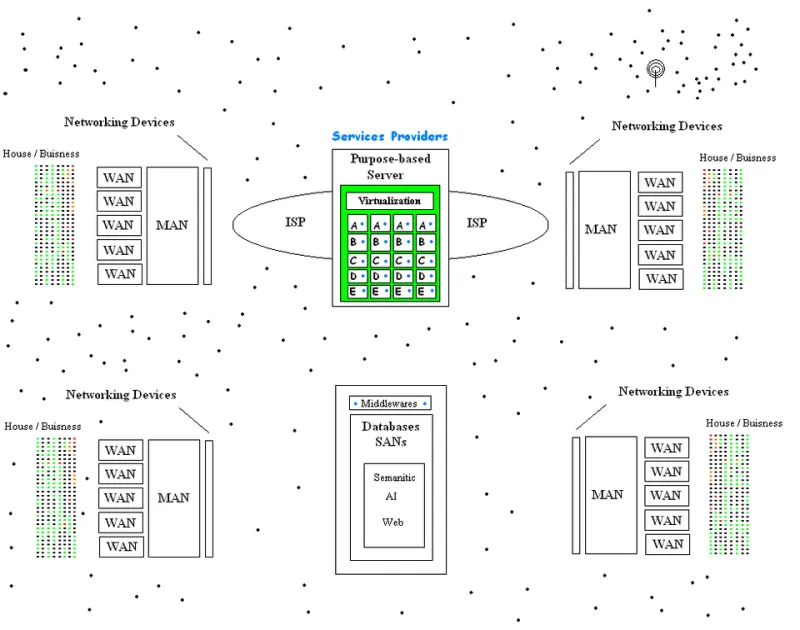
The uncomfortable truth is that many enterprises are not operating a multi-cloud strategy. They are operating a multi-cloud accident. Different business units, acquired companies, and internal teams have each made independent platform decisions, often for entirely legitimate reasons, and the cumulative result is an architecture that no single roadmap ever envisioned.
Understanding how this happens—and what it quietly costs—is the first step toward reclaiming control.
How Fragmentation Takes Root
Cloud fragmentation rarely begins with a reckless decision. It typically starts with a pragmatic one.
A development team selects AWS because their engineers know it well. The finance department standardizes on Microsoft Azure because it integrates cleanly with the organization's existing Microsoft 365 environment. A data science team adopts Google Cloud for its BigQuery capabilities. Meanwhile, a recently acquired subsidiary arrives with its own Salesforce infrastructure and a custom deployment on a regional cloud provider nobody at headquarters has ever worked with.
Each of these choices, viewed individually, is defensible. Viewed collectively, they represent a governance problem waiting to materialize.
Organizational silos accelerate the process. When procurement, security, and engineering operate in relative isolation—a common condition in large enterprises—there is no mechanism to flag redundancy or enforce standards before commitments are made. By the time leadership recognizes the scope of the problem, the technical debt is already substantial and the political will required to consolidate is daunting.
The Hidden Costs Nobody Budgeted For
The financial implications of accidental multi-cloud complexity extend well beyond the sum of individual cloud invoices.
Redundant licensing and tooling. When teams manage separate cloud environments independently, they frequently purchase overlapping monitoring tools, security platforms, and identity management solutions. An organization may be paying for three different cloud cost optimization tools without any of them providing a unified view of total spend.
Governance gaps and compliance exposure. Inconsistent security standards across cloud environments are not merely inefficient—they are a liability. A rigorous data handling policy applied to one platform means little if another environment, used by a different team, lacks equivalent controls. Regulatory frameworks such as HIPAA, SOC 2, and the various state-level data privacy laws now active across the US do not recognize internal organizational boundaries as an excuse for inconsistent compliance posture.
Engineering bandwidth fragmentation. Perhaps the most underappreciated cost is the drain on technical talent. When infrastructure engineers must maintain fluency across multiple platforms—each with its own tooling, API conventions, and update cadences—the cognitive overhead is significant. Context-switching between environments reduces depth of expertise and increases the likelihood of configuration errors.
Billing opacity. Cloud providers structure pricing in ways that reward consolidation and punish fragmentation. Enterprises that spread workloads across platforms without deliberate planning frequently miss volume discount thresholds on every platform while maximizing none of them. Combined with the difficulty of attributing shared costs across business units, finance teams are often working with cloud spend estimates rather than precise figures.
Accidental vs. Intentional Multi-Cloud: A Critical Distinction
It is worth stating clearly: operating across multiple cloud platforms is not inherently problematic. Many sophisticated enterprises deliberately distribute workloads based on each provider's genuine strengths—and do so with unified governance, consolidated billing visibility, and consistent security baselines.
The distinction between accidental and intentional multi-cloud architecture comes down to three questions:
- Is there a single documented policy governing how cloud platforms are selected, approved, and managed?
- Does a centralized team or function maintain visibility into total cloud spend, security posture, and data flows across all environments?
- Are workload placement decisions driven by technical and business requirements, or by historical inertia and departmental preference?
Organizations that cannot answer yes to all three are, by definition, operating accidentally.
A Framework for Regaining Control
Resolving multi-cloud fragmentation does not require a painful consolidation to a single provider—an approach that is often neither practical nor advisable given contractual commitments and legitimate platform dependencies. What it does require is a deliberate governance layer imposed over the existing complexity.
Step one: Map the full environment. Before strategy can be applied, leadership needs an honest inventory of every cloud platform in use, every team that manages one, and every workload running on each. This is frequently more difficult than it sounds, particularly in organizations where shadow IT practices have allowed cloud adoption to outpace documentation.
Step two: Establish a Cloud Center of Excellence. A cross-functional team—representing engineering, security, finance, and business operations—should own the organization's cloud governance framework. This body is responsible for setting platform selection criteria, enforcing security baselines, and maintaining the authoritative view of cloud spend and architecture.
Step three: Implement unified visibility tooling. Platform-agnostic cloud management tools can provide consolidated cost tracking, security posture monitoring, and compliance reporting across AWS, Azure, Google Cloud, and specialty platforms simultaneously. This visibility is the precondition for informed decision-making.
Step four: Define a rationalization roadmap. Not every platform needs to be eliminated, but every platform needs to earn its place. Workloads should be evaluated against clear criteria: performance requirements, cost efficiency, regulatory constraints, and strategic fit. Redundant environments should be sunset on a defined timeline.
Step five: Enforce before you expand. The governance framework established through this process should become the gate through which all future cloud decisions pass. New platform adoptions, expanded workloads, and acquired company integrations should require documented justification and centralized approval.
The Strategic Imperative
Cloud infrastructure is no longer a back-office technical concern—it is the operational foundation on which modern enterprises run. When that foundation is fragmented, inconsistently governed, and financially opaque, the consequences surface in security incidents, budget overruns, and engineering teams that spend their time managing complexity rather than delivering value.
The organizations that will compete most effectively in the years ahead are those that treat cloud architecture as a deliberate strategic asset rather than an accumulated byproduct of departmental decisions. Achieving that posture requires acknowledging, candidly and without defensiveness, the degree to which today's environment may have drifted from any intentional design.
That acknowledgment is not a failure of leadership. It is the precondition for the kind of expert-guided transformation that turns accidental complexity into competitive advantage.